
Why Force Plate Technology is the New Gold Standard at Prohab Clinics Kent
For decades, the world of physical therapy and sports rehabilitation relied heavily on the “eye test.” A clinician would watch you perform a squat, palpate a muscle to check for tension, and ask the subjective question: “How does that feel?”
While clinical intuition and years of experience are undeniably valuable, the human eye has its physiological limits. It operates at roughly 30 to 60 “frames per second.” It cannot detect the millisecond delays in force production, the subtle tremors in neuromuscular control, or the critical 15% deficit in your left-side braking force during a landing.
At Prohab Clinics Kent, we believe your recovery, your performance, and your long-term joint health shouldn’t be left to guesswork. We have entered the era of Objective Data, where we trade “I think you’re ready” for “The data shows you’re ready.”
What Exactly Are Force Plates?
To the naked eye, force plates look like two sleek, low-profile metallic platforms on the clinic floor. However, the technology housed within them is revolutionary for the average patient.
Imagine two highly sensitive bathroom scales, but instead of just measuring your static weight, they sample data at 1,000 times per second (1kHz). This high-frequency sampling allows us to measure the Ground Reaction Force (GRF) – the force that the ground exerts back on your body in response to the forces you exert on it.
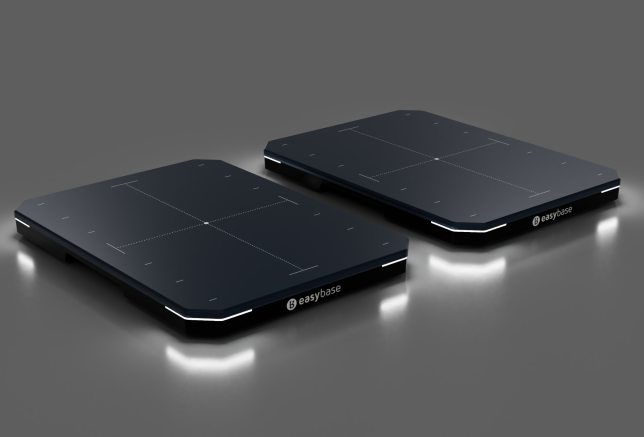
Whether you are performing a simple sit-to-stand, a countermovement jump, or even just standing still (balance testing), the plates capture three-dimensional data:
- Vertical Force: How much power you are driving into the ground.
- Braking Force: How well you can absorb shock and slow your body down (crucial for ACL health).
- Lateral/Medial Force: How much you are swaying or shifting side-to-side.
By capturing this data, we move away from qualitative descriptions (“You look a bit shaky”) to quantitative facts (“Your rate of force development is 20% lower on the right side”).
The Silent Killer of Progress: Detecting Asymmetries
The most dangerous phase of any injury recovery is the “Feel Good” phase. This is the period where your pain has subsided, you’ve regained your range of motion, and you feel ready to return to the gym or the pitch. However, this is often where the body is at its most vulnerable because it has learned to “cheat.”
If you have previously injured your right knee, your brain is incredibly efficient at protecting it. It will subconsciously shift a portion of the mechanical load – often 10% to 15% – to your left side. Because the shift is subtle, you won’t feel it, and a coach won’t see it.
This asymmetry is a ticking time bomb. It leads to:
- Overuse injuries on the “healthy” side because it is doing 110% of the work.
- Re-injury on the weak side because the muscles aren’t firing fast enough to protect the joint under stress.
- Early-onset osteoarthritis due to uneven joint loading over thousands of steps.
Our force plates identify these “hidden” asymmetries instantly. We can see exactly which leg is doing the work during the “take-off” phase of a jump and, more importantly, which leg is doing the work during the “landing” or braking phase.
Why Objective Data Matters for Your Recovery
Using force plate technology at our Kent clinic allows us to provide a level of care that was previously reserved only for elite-level athletes. Here is how it changes your journey at Prohab:
1. Objective Benchmarking
We don’t just compare you to how you felt last week. We compare your data against normative standards for your age, weight, and sport. We can tell you exactly where you sit on the spectrum of “healthy function.” If you are a runner in Tunbridge Wells or a footballer in Maidstone, we can show you how your explosive power compares to the benchmarks required to stay injury-free in those activities.
2. Precision Progress Tracking
Traditional rehab can feel like a slow grind where you aren’t sure if you’re actually getting stronger. Force plates provide a neuromuscular scoreboard. Even if your muscle size hasn’t changed visibly, we can see if your brain is getting better at “recruiting” those muscle fibres. We see if your rehab is actually working weeks before you might feel a physical difference. This keeps you motivated and ensures we aren’t wasting time on exercises that aren’t moving the needle.
3. The “Return to Play” Decision
“When can I run again?” is the most common question we get. In the past, the answer was based on time (e.g., “it’s been six weeks”). Today, we use Return to Play (RTP) metrics. We look at your Limb Symmetry Index (LSI). If your injured limb is only producing 80% of the force of your healthy limb, you aren’t ready to sprint. By waiting until that number reaches 90% or 95%, we drastically reduce the risk of you ending up back on the treatment table.
From Premier League to Kent: Elite Care for Everyone
You might wonder, “Do I really need this if I’m not a pro athlete?” The answer is a resounding yes.
The mechanics of a knee joint are the same whether you are scoring a goal at Wembley or walking the dog through the Kent Downs. In fact, for the general population, objective data is perhaps more important. Athletes have coaches watching them every day; you likely don’t. You need the most efficient, most accurate data possible to ensure your limited training time is effective.
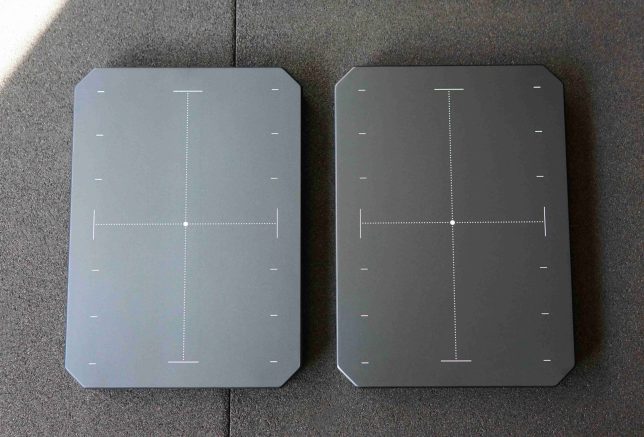
By using the same technology utilised by Premier League football clubs, NBA teams, and Olympic training centres, Prohab Clinics is bringing a new standard of healthcare to Kent. We aren’t just treating symptoms; we are measuring human function at its most fundamental level.
Summary: The Prohab Advantage
When you book an assessment at Prohab Clinics, you aren’t just getting a consultation; you are getting a comprehensive biomechanical audit.
- Accuracy: No more “guessing” which side is weaker.
- Safety: Identify injury risks before they become painful realities.
- Efficiency: Direct your energy toward the specific exercises your body actually needs.
- Confidence: Return to the activities you love knowing your body is truly ready.
Are you ready to see what the eye can’t? Stop wondering if your strength training is working and start knowing.
Book your Force Plate Strength Assessment at our Kent clinic today and take control of your recovery with objective data.